No posts today! Murdered by Elon.
One of the few aggregators I loved to use. Goodbye.
No posts today! Murdered by Elon.
One of the few aggregators I loved to use. Goodbye.
The tech industry is abuzz about a new standard for social networking that is more open, more user-centric, and potentially more powerful than Twitter and Facebook. But we’ve been here before.
Unfortunately, the current Companies House name rules – while covering copy-cats and offensive language – do not cover attempts to poison data inputs.
This is a problem, because dozens of websites, databases and other processors pull in details from Companies House – and not all of them are good at sanitising their data inputs, which can be poisoned simply with a name.

Free chapter from the eBook Shareware Heroes. Plus the website is amazing.
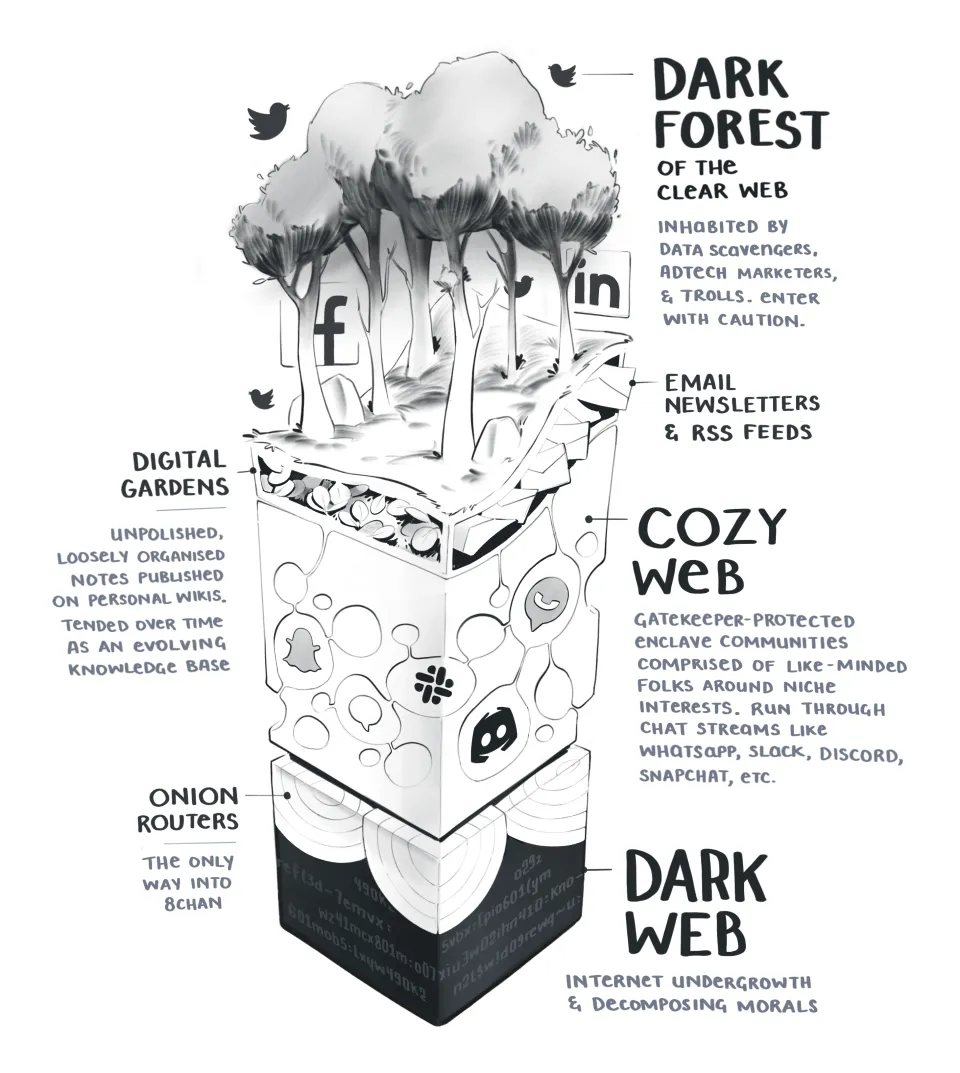
In Silicon Valley, the user’s experience has become subordinate to the company’s stock price. Google, Amazon, Meta, and other tech companies have monetized confusion, constantly testing how much they can interfere with and manipulate users. And instead of trying to meaningfully innovate and improve the useful services they provide, these companies have instead chased short-term fads or attempted to totally overhaul their businesses in a desperate attempt to win the favor of Wall Street investors.
Annual collection of html curiosities.

Coolest website i’ve seen a quite a while.

These days, the arguments for a 16-pixel baseline are widely accepted: We have plenty of data supporting its readability, it can prevent unintentional zoom in mobile browsers, and it’s been the default in every major browser for many years.
But there are plenty of reasons to go even larger…
It has always been an opinionated piece of software, and using it as a CMS has always meant chafing against Automattic’s assumptions about how and why their software is used.
For a long time, the Lighthouse Performance Score was the page speed metric to track. Often, sharing a perfect 100 Performance Score was considered a sign of success. But as the page speed evolves, we need to critically evaluate if the metrics we’re using are still relevant and helpful.